
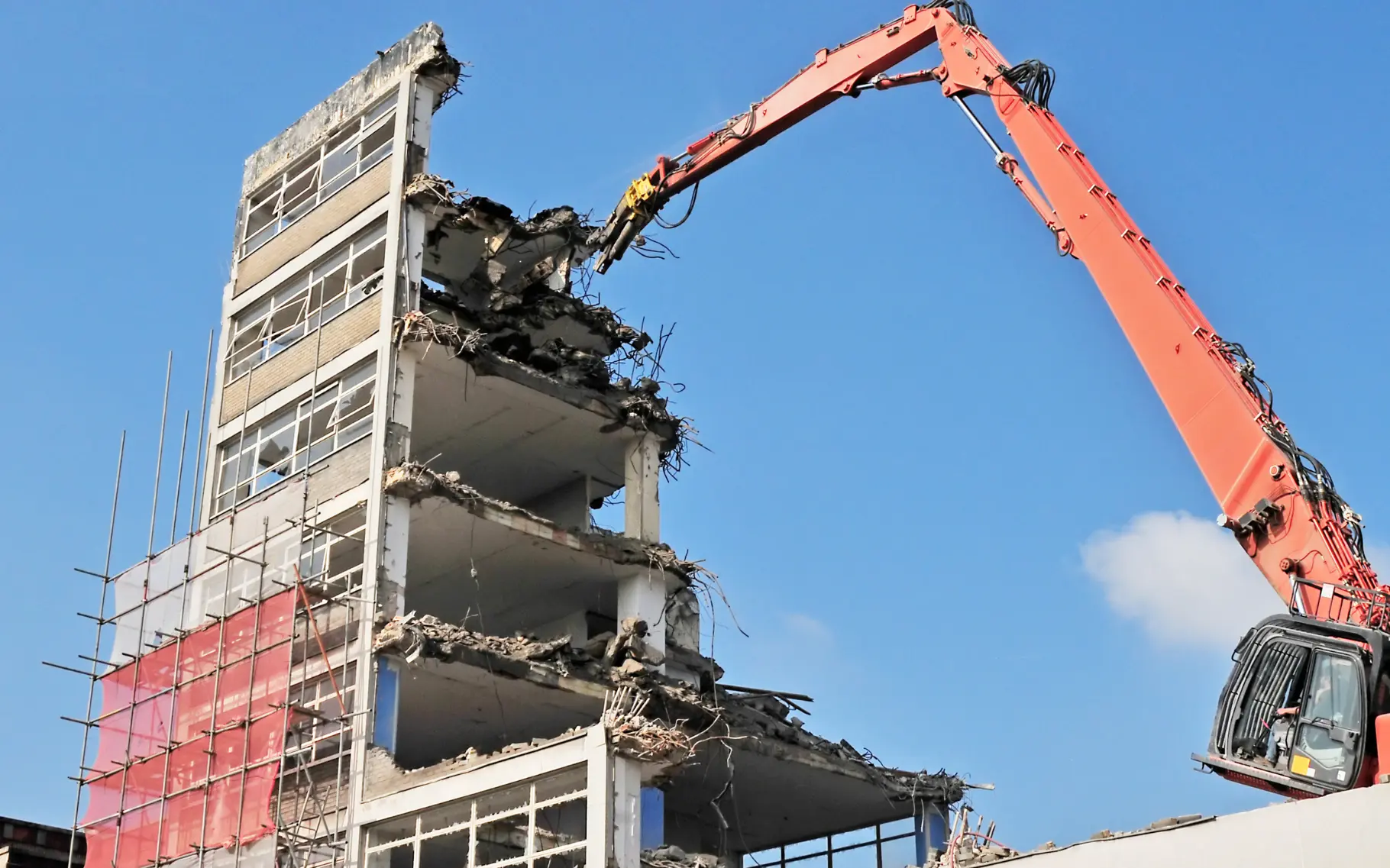
Before you can begin a demolition, there’s a very important step that can’t be missed: obtaining a demolition permit.
No matter what kind of structure you’re demolishing, most jurisdictions require formal approval from the government in the form of a permit before your work can start.
This guide covers everything commercial and residential builders need to know about demolition permits, including:
- When they’re required
- How to apply for one
- What fees to expect
- How to avoid common demolition permitting issues
Pull demolition permits faster with PermitFlow. Learn more →
What are demolition permits and why do they matter?
Demolition permits are official authorizations issued by a local government or building department that grants permission for the full or partial removal of an existing structure. It’s a critical part of the preconstruction process and ensures that work is completed safely, legally, and with the right oversight.
Demolition permits help ensure that:
- Common utilities like gas, water, and electricity are safely disconnected before demolition
- Hazardous materials such as asbestos or lead are identified and removed
- Adjacent structures and other public infrastructure are protected from damage
- Waste and debris are handled according to local environmental standards
What is considered demolition work?
Every jurisdiction will have its own specific definition, but generally speaking, demolition is the act of dismantling or destroying part or all of a structure.
Are demolition permits necessary?
While every jurisdiction is different, if you’re demolishing part or all of a structure, the answer is almost always yes. Complete or partial demolition typically requires prior approval from local regulating bodies.
Always double check with your local permitting authority, especially if utilities are involved.
When is a demolition permit required?
The specific requirements for a demolition permit will depend on your location, project type, and structure size.
Typically, the following scenarios will require a demolition permit:
- Complete structure removal: When a building is being torn down in its entirety, including foundations or slabs.
- Partial structure demolition: Removing a portion of a structure like load-bearing walls or utility systems, which can trigger necessary safety inspections.
- Redevelopment projects: Clearing a site for a new build or expansion may require a demolition permit before the new construction actually begins.
- Historic properties: If a building is designated as historic or over a certain age (usually anything over 50 years old), there may be special processes required to approve demolition.
Many jurisdictions will require proof that all utilities have been properly disconnected before issuing a demolition permit. Environmental and safety reviews, like asbestos inspections, may also be mandated.
Commercial projects may also require additional oversight from the zoning, fire, or public works department to ensure the safety of workers and inhabitants alike. These extra layers may extend permit approval timelines, so start the permitting process as early as possible.
There are some situations where a demolition permit might not be required, such as:
- Removing small accessory structures (like a shed or detached storage) under a certain size threshold, typically 200 square feet or less.
- Non-structural interior removal, such as flooring, cabinetry, or drywall.
How to pull a demolition permit
We can’t stress enough that every jurisdiction sets its own rules and procedures around demolition permits. For any project, be sure to check with your local AHJ.
That said, here is an outline of the process you can typically expect to follow when pulling a demolition permit:
1. Verify local requirements
Check with the local AHJ that oversees demolition permits. This is typically the city or county building department. Some regions may require more coordination with environmental or historic preservation departments depending on the project.
2. Gather all necessary documentation
Prepare your demolition permit application, which might include:
- A site plan detailing the structure to be demolished
- A written scope of work describing demolition methods and safety measures
- Proof of ownership or authorization from the property owner
- Contractor license and insurance documentation
- Utilities disconnect letters from gas, electric, water, and sewer providers.
3. Submit the application
Most jurisdictions allow you to apply online through a portal, however there are some that still require in-person reviews and submissions. Ensure all supporting materials are attached and the application is signed by the authorized contractor.
Pro tip: Reduce your workload when pulling a permit by up to 90% by using a permit management tool like PermitFlow. Learn how it works →
4. Potential environmental and safety inspections
Before approving your permit, the local AHJ may require inspections or testing for hazardous materials. Builders have to confirm that dangerous materials like asbestos, lead paint, or other dangerous contaminants are property assessed and abated.
5. Receive and display the permit
The review process can take anywhere from a couple days to several weeks depending on project complexity and the local building department’s backlog.
Once approved, permits must be posted visibly on site before demolition begins.
6. Post-demolition compliance
After demolition, inspectors may visit the site to confirm debris removal and safety compliance. Builders may also need to submit documentation proving proper waste disposal or recycling.
Demolition permit fees and timelines
Demolition permit costs vary widely depending on the project type, size, and jurisdiction.
In general, permit fees will look like:
- Residential demolition permits: Average range between $50 to $300
- Commercial demolition permits: These permits are usually scaled based on square footage or project cost. Feels can reach $1,000 or more depending on the complexity of the structure.
Some additional costs may include:
- Environmental testing and abatement
- Utility disconnection fees
- Waste management or recycling fees
Common issues when pulling demolition permits
Even the most experienced contractors can encounter a hiccup when navigating the demolition application process.
The most frequent issues include:
- Incomplete applications
Missing site plans, contractor documentation, or utility disconnect letters can stall the permit review process. - Environmental delays
Asbestos or other hazardous material testing often takes longer than expected, especially for older buildings. - Multi-agency coordination
In some jurisdictions, multiple agencies have to review the plan. This requires more time and coordination. - Ownership discrepancies
Incorrect property records or outdated deeds can delay permit approval. - Shifting local codes
Sometimes regulatory codes change during a review period. This could change requirements mid-process which means going back to fix plans or adjust requirements.
Starting early and maintaining detailed documentation can help prevent costly setbacks and expedite your approval.
How to streamline the demolition permit process
A proactive and organized approach to permitting can make all the difference.
Here are a few strategies to simplify the process of pulling a demolition permit:
- Review local requirements early
Research your jurisdiction’s rules and requirements during the preconstruction phase. Double check to see if any new regulations were passed that may affect your project timeline. - Coordinate with utilities early
Request disconnections as early as possible before applying for the permit to avoid bottlenecks. - Submit a complete and detailed application
Double-check that all forms, plans, and supporting documents are as accurate as possible. - Maintain communication with agencies
Regularly follow up with permitting offices to confirm review progress. - Use permit management software
Streamline submissions, automate notifications, and centralize documentation all in one convenient platform.
Save time with PermitFlow
PermitFlow’s permit management software helps construction pros by streamlining applications, tracking approvals, and reducing administrative overhead. Our AI-powered platform can handle the heavy lifting, helping you pull permits 2.5x faster.
Get a demo today to see how PermitFlow speeds up the permitting process.